Walk into a tea shop, online or on a quiet street, and you meet a wall of pots, picks, scales and leaves with names you cannot pronounce. It is easy to conclude that you need all of it before you can brew a decent cup. You do not.
What follows is the short version: the tools that earn their counter space, the teas that teach you the most for the least money, and a few habits that prevent the most common beginner mistakes. Buy in this order and you can be drinking good tea this week.
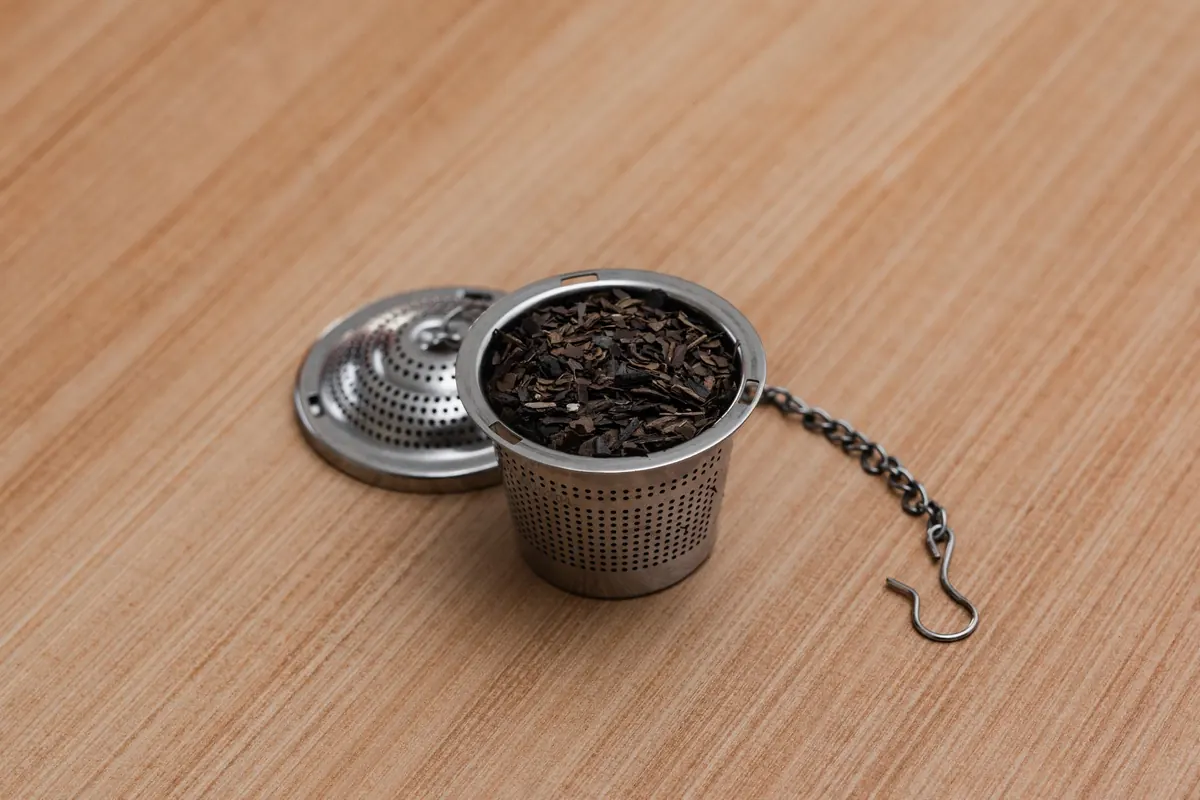
The core kit is smaller than you think. You can brew excellent tea with a kettle, a mug, a strainer and a scale. Everything beyond that is a refinement, and refinements are much easier to choose once you know what you like.
A gaiwan if you started with a teapot, or a small pot if you started with a gaiwan. Two or three small cups so you can pour for someone else. A tea tray to catch drips. A thermos so you can drink the second and third steeps at your desk. A second pot, eventually, so you can taste two teas side by side.
Dedicated clay pots that are meant to season with one specific tea, matcha whisks and bowls unless matcha is what you drink, and any appliance that promises a perfect cup from a single button. All of these are answers to questions you will have later.
Five teas, chosen for range rather than rarity. Buy small amounts, roughly 50 grams each, and plan on tasting each one three times before you decide whether you like it.
Tea is almost entirely water, so if your tap water tastes strongly of chlorine or minerals, your tea will too. Freshly filtered water is the cheapest improvement you can make. Do not keep reheating the same water in the kettle all afternoon; start fresh, and pour out whatever is left at the end of the day.
Rough temperatures: greens and whites around 160 to 180°F (70 to 82°C), oolongs around 185 to 200°F (85 to 93°C), blacks and pu'er just off the boil. No thermometer? Let the kettle rest three minutes off the boil for greens, one minute for oolongs.
Tea has four enemies: air, light, heat and strong smells. Keep it in an airtight tin or a well-sealed bag, in a cupboard away from the stove and the spice rack. Skip the refrigerator unless the tea is vacuum sealed, and if you do refrigerate it, let the package come to room temperature before opening so condensation does not form on the leaves.
Greens and light oolongs are best within a few months of opening. Roasted oolongs and blacks hold their character for a year or more. Ripe pu'er keeps improving with a little air around it. This is another argument for buying small amounts often rather than large amounts once.
Brew the same tea three times in one sitting and change one variable each time: more leaf, cooler water, a shorter steep. Note what you tasted on your phone, in plain words, without worrying about whether "orchid" is the right descriptor. Two weeks of this teaches you more than ten new teas bought in a hurry.
If you want a single path to follow, take this one:
One practical note: caffeine content varies a lot between teas and between steeps, so if you are pregnant, sensitive to caffeine, or managing a condition, it is worth asking a clinician rather than guessing from the color of the liquor.
Beyond that, keep it small and keep it honest. Six tools, five teas, and a notebook will carry you further than a cabinet of equipment you do not yet know how to use.
Photo: Lucas Oliveira / Pexels